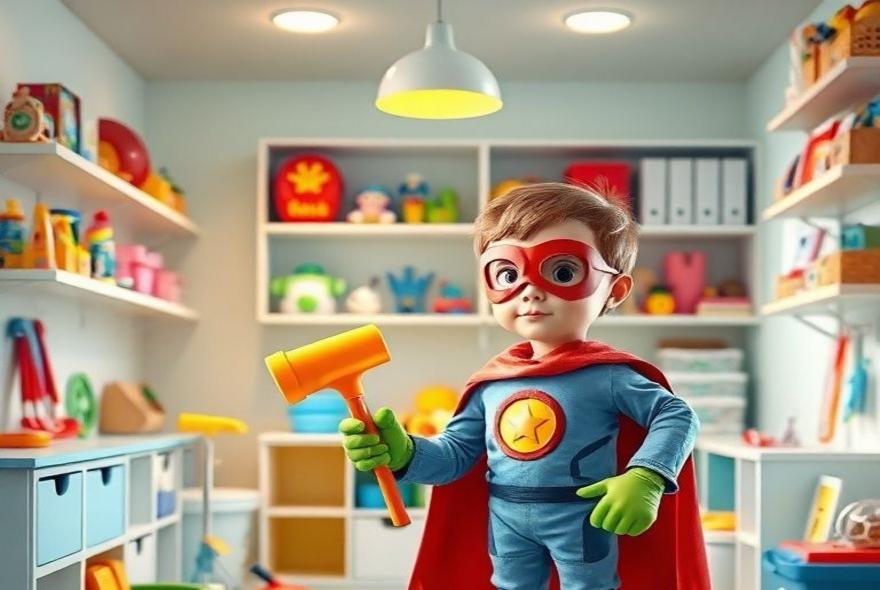
Ever tried transforming scrubbing duty into a game of hide-and-seek? Welcome to the whimsical world where cleaning isn’t a chore but an adventure! Discover the secret of turning everyday cleaning tasks into playful activities that kids will adore. Through these techniques, you’ll learn to disguise work as play, making your little helpers eager to jump in. Delight in their giggles as they help out, all the while forgetting they’re doing chores. Ready to swap the mop for magic? Let’s dive into this captivating saga of playtime and productivity!
Key Takeaways
- Turning chores into playtime can make cleaning a breeze – and kids will love it!
- Engage kids with playful activities disguised as cleaning tasks.
- Try chore races to see who can tidy up the fastest – it’s cleanup on turbo mode!
- Singing silly cleaning songs can transform scrubbing into a family jam session.
- DIY costume days: dress up as superheroes and conquer dust bunnies together.
- Why pick up toys alone when you can create a scavenger hunt instead?
- Want eager little helpers? Turn vacuuming into a dance-off challenge!
- Even the stubbornest stains can’t resist a fun game of ‘find and wipe’.
The Psychology Behind Turning Work Into Play
You know that magical moment when your kid suddenly becomes obsessed with something that was previously torture? That’s exactly what happens when we crack the code on how to make cleaning fun. The secret isn’t in fancy equipment or elaborate reward systems—it’s in understanding how children’s brains work. Kids are naturally wired to learn through play, and when we frame cleaning as just another form of exploration and creativity, their resistance melts away faster than ice cream on a summer day. The trick lies in tapping into their innate curiosity and turning mundane tasks into adventures that feel meaningful and exciting.
- Leverage their natural competitiveness: Kids cleaning tips often revolve around friendly challenges—set up races to see who can sort toys fastest, or create point systems where family members earn rewards for completing different cleaning missions together.
- Transform spaces into imaginative worlds: A messy bedroom becomes a kingdom under siege, and your little ones are the brave knights restoring order—suddenly organizing clothes feels like an epic quest rather than a boring chore.
- Use storytelling to create engagement: Develop ongoing narratives where cleaning supplies have personalities and cleaning tasks become rescue missions—dust bunnies need to be relocated to their proper home, and toys are lost travelers seeking their designated kingdoms.
- Celebrate process over perfection: Focus on effort and improvement rather than flawless execution—when kids feel proud of their progress, they naturally want to continue developing their skills and taking on new challenges.
- Build in choice and autonomy: Let children decide which tasks to tackle first or how to organize their spaces—having control over the process makes them feel empowered rather than bossed around.
Creating Your Ultimate Family Cleaning Routine
Here’s the thing about family cleaning routines—they’re like fingerprints, completely unique to each household’s personality, schedule, and chaos level. What works brilliantly for your neighbor’s family might be a complete disaster in your home, and that’s totally okay! The most successful families don’t just copy someone else’s system; they create custom approaches that naturally motivate children to clean while fitting seamlessly into their existing rhythms. We think the magic happens when you stop fighting your family’s natural tendencies and start working with them instead.
- Start with a family meeting: Get everyone involved in designing the system—ask kids what cleaning tasks they find most interesting, which music makes them feel energetic, and what rewards would genuinely motivate them to participate consistently.
- Create manageable time blocks: Most successful cleaning games happen in 15-20 minute bursts rather than marathon sessions—short, focused periods maintain energy and prevent overwhelm while still accomplishing meaningful progress.
- Establish clear expectations: Use visual aids like before-and-after photos, simple checklists with pictures, or demonstration videos so everyone knows exactly what “clean” looks like for different areas and tasks.
- Build flexibility into the structure: Have backup plans for sick days, busy weeks, or when motivation is running low—maybe it’s a simplified version that focuses on just the essentials, or a completely different approach that matches the day’s energy level.
- Schedule regular system reviews: What motivates a six-year-old won’t necessarily work for that same child at eight—plan monthly check-ins to adjust responsibilities, refresh rewards, and incorporate new interests or abilities.
Game-Changing Strategies to Motivate Children to Clean
Motivation is everything when it comes to transforming reluctant kids into enthusiastic cleaning helpers, but here’s what most parents get wrong—they try to motivate through external pressure instead of tapping into what naturally drives children. The most effective ways to motivate children to clean involve understanding what makes them tick individually and then crafting experiences that feel personally meaningful and engaging. Some kids thrive on competition, others prefer collaboration, and many just want to feel important and capable of contributing something valuable to the family unit.
- The “expertise” approach: Position children as specialists in certain areas—maybe your daughter becomes the “bathroom organization expert” while your son masters “living room restoration projects”—this builds pride and ownership in their particular domains.
- Create cleaning personalities: Help each child develop a unique cleaning character with special powers, signature moves, and personal catchphrases—”Captain Clutter-Crusher” might specialize in toy organization while “Dust Detective” excels at finding hidden messes.
- Use technology strategically: Apps that gamify cleaning, playlists that match cleaning energy, or even simple timers can add modern appeal to traditional tasks—kids often respond well to digital elements that make activities feel current and relevant.
- Implement peer recognition: Let kids show off their cleaned spaces to friends, teach cleaning techniques to younger siblings, or document their progress through photos and videos they can share with extended family members.
- Connect cleaning to bigger goals: Help children understand how their efforts contribute to family happiness, prepare for special events, or create welcoming spaces for friends—when kids see the meaningful impact of their work, intrinsic motivation grows stronger.
Transforming Ordinary Tasks Into Exciting Cleaning Games
Games are the ultimate secret weapon for making cleaning feel like the highlight of the day rather than something to endure. The beauty of well-designed cleaning games lies in their ability to disguise work as play so effectively that kids genuinely forget they’re accomplishing real household tasks. You know how children can spend hours playing video games without getting bored? That’s because games provide clear objectives, immediate feedback, progressive challenges, and satisfying rewards—all elements we can easily incorporate into cleaning activities with a little creativity and planning.
- Timer-based challenges: Create different “levels” where kids race against clocks to complete specific tasks—start with generous time limits and gradually decrease them as skills improve, celebrating personal bests and breakthrough moments along the way.
- Sorting competitions: Transform organizing into Olympic-style events with categories like speed-sorting socks, accuracy in toy categorization, or creativity in arranging books—mix individual and team challenges to keep things fresh and inclusive.
- Musical cleaning adventures: Design playlists where different songs trigger specific cleaning activities—upbeat tracks for energetic tasks like vacuuming, slower songs for detail work like organizing drawers, and celebration music for admiring completed projects.
- Scavenger hunt cleaning: Create lists of items that need to be found, organized, or relocated throughout the house—kids love the treasure hunt aspect while accomplishing serious decluttering and organizing goals.
- Role-playing scenarios: Let children become characters in cleaning stories—they might be scientists organizing laboratory equipment, chefs arranging kitchen supplies, or superheroes saving the world through the power of organization and cleanliness.
Age-Appropriate Cleaning Adventures
Every superhero needs powers that match their abilities, and the same principle applies when figuring out how to make cleaning fun for different age groups. What excites a toddler will bore a tween, while tasks perfect for older kids might overwhelm preschoolers and create frustration instead of joy. The trick is matching cleaning responsibilities to developmental stages while still making everything feel special, important, and appropriately challenging. We’ve found that kids cleaning tips work best when they’re tailored to where children are developmentally, not where we think they should be.
- Ages 2-4 (Little Helpers): Focus on simple sorting games, putting toys in designated bins, wiping surfaces with colorful cloths, and “helping” make beds by pulling covers—their cleaning superpower is being detail detectives who spot items that don’t belong in certain areas.
- Ages 5-7 (Cleaning Apprentices): Introduce vacuuming small areas, organizing bookshelves by size or color, folding washcloths and small clothes, and managing personal toy collections—they become “organization specialists” who love creating systems and seeing immediate results.
- Ages 8-10 (Junior Cleaning Managers): Assign bathroom maintenance, kitchen tasks like loading dishwashers and wiping counters, managing complete laundry cycles, and planning room reorganization projects—their superpower becomes teaching younger siblings and taking pride in multi-step processes.
- Ages 11+ (Cleaning Leaders): Handle complex deep-cleaning projects, research and implement new organization systems, take full ownership of specific household areas, and coordinate family cleaning efforts—they develop leadership powers through mentoring and project management.
- Flexibility is key: Always adjust expectations based on individual personalities, interests, and abilities rather than strictly following age guidelines—some kids develop skills earlier or later, and that’s perfectly normal and acceptable.
Building Characters and Stories That Make Cleaning Magical
Kids live in worlds of imagination, so why not invite those magical worlds into cleaning time? Creating characters and storylines transforms ordinary household tasks into epic adventures where children become the heroes of their own cleaning narratives. This approach works especially well because it gives kids complete ownership over the story—they’re not just following orders from grown-ups, they’re embodying powerful characters with important missions that only they can accomplish. The best part? These characters can evolve and grow more complex as children develop new skills, interests, and cleaning abilities.
- Develop signature cleaning personas: Help each child create their own superhero identity complete with special abilities, memorable catchphrases, and signature cleaning moves—”Dust Destroyer” might have the power to make surfaces sparkle, while “Toy Wrangler” specializes in organizing play areas with lightning speed.
- Create ongoing story arcs: Develop continuing adventures where different cleaning tasks become missions to save the day—maybe the living room is under attack by clutter creatures, the kitchen needs heroes to restore order before dinner celebrations, or bedrooms require rescue from the chaos monsters.
- Design simple costumes and props: Cleaning capes made from old towels, special “hero” cleaning gloves in bright colors, decorated spray bottles, or personalized cleaning caddies can help kids get into character and feel more connected to their cleaning personas.
- Implement character progression systems: As kids master certain tasks, their characters can “level up” with new abilities, earn special titles, or tackle more challenging missions—this mimics video game progression systems that naturally motivate continued engagement and skill development.
- Encourage character collaboration: Let siblings’ cleaning characters work together on team missions, creating opportunities for cooperation, shared storytelling, and social bonding that makes cleaning a fun family activity rather than isolated individual work.
Reward Systems That Actually Work Long-Term
Here’s where many well-meaning parents stumble—they either skip rewards entirely or create systems so complicated that nobody can keep track of who earned what or why. The most effective reward systems for maintaining cleaning motivation are simple enough to manage consistently but exciting enough to sustain enthusiasm over months and years. You want to celebrate effort and improvement, not just perfection, and surprisingly, the best rewards often aren’t things you buy but experiences you share and privileges you grant. Research shows that intrinsic motivation grows stronger when external rewards gradually shift toward recognition and autonomy.
- Experience-based incentives: Offer privileges like choosing the family movie night selection, picking weekend activities, staying up fifteen minutes later on weekends, having friends over for special occasions, or earning one-on-one time with parents doing favorite activities.
- Recognition and celebration rituals: Take before-and-after photos of their cleaned spaces, share their accomplishments with grandparents and extended family, create “cleaning champion” albums that showcase their developing skills, or display their organized areas prominently for visitors to admire.
- Increasing independence and control: The ultimate reward for consistent cleaning habits is earning more autonomy over personal spaces and schedules—kids who maintain their areas consistently can earn privileges like room decorating decisions, flexible cleaning timeframes, or input on family organization projects.
- Family celebration traditions: Create special rituals for acknowledging cleaning achievements—maybe it’s a victory dance parade, silly songs, special snacks that only appear after successful cleaning sessions, or family high-five ceremonies that make everyone feel accomplished.
- Peer teaching opportunities: Let experienced young cleaners show off their organized spaces to friends, teach cleaning techniques to younger children, help plan family cleaning events, or demonstrate their expertise during playdates—social recognition often motivates kids more than material rewards.
Troubleshooting When the Magic Starts to Fade
Even with the most brilliant strategies, you’ll inevitably hit rough patches—days when nobody wants to clean, systems that worked beautifully last month but suddenly feel stale, or kids who seem to have forgotten everything they learned about maintaining organized spaces. Don’t panic or assume you’ve failed! These challenges are completely normal parts of developing long-term cleaning habits and usually signal that it’s time to refresh your approach rather than abandon it entirely. The key is staying flexible and remembering that building sustainable cleaning routines is definitely a marathon, not a sprint.
- When motivation mysteriously disappears: Shake things up by introducing new music playlists, rearranging who handles which tasks, switching cleaning times to different parts of the day, or adding fresh challenges like themed organizing projects—sometimes tiny changes can reignite enthusiasm completely.
- Dealing with perfectionist tendencies: Some kids get overwhelmed trying to make everything absolutely perfect, so break large tasks into smaller, manageable steps and consistently celebrate “good enough” efforts—progress always matters more than perfection when building lifelong habits.
- Managing sibling rivalry and competition: If competitive elements become negative or hurtful, shift focus immediately to team challenges where everyone works together toward common family goals rather than competing against each other for individual recognition and rewards.
- Handling resistance to new systems: Involve kids directly in creating and regularly modifying cleaning routines so they feel genuine ownership over the entire process—when children help design the system, they’re significantly more likely to follow through consistently over time.
- Maintaining momentum during busy or stressful periods: Develop simplified “emergency” cleaning routines for hectic weeks that focus exclusively on absolute essentials—maintaining some structure is always better than abandoning cleaning routines entirely during challenging times.
Who knew chores could be transformed into a lively playtime adventure? By creatively disguising work as play, you’re not just cleaning the house but also cultivating a fun environment where your little ones eagerly jump in to help. We’ve explored various techniques, like turning dusting into a treasure hunt and mopping into a slip-and-slide festival. The core message here is about making everyday cleaning tasks exciting and engaging for kids, using their boundless energy as a catalyst for productivity. With these vibrant techniques, tackling daily chores becomes a win-win situation—you get a tidier house, and they get a playground of imagination and fun.
And hey, if this inspired a cleaning spree but life’s too busy… Wrapping this up, if you’re ready to tackle your home cleaning without the hassle, hit us up at Joy of Cleaning. Book a Cleaning online or call (727) 687-2710—we’ve got your back! Follow us on Instagram and Facebook for more fun tips and tricks.