You ever find yourself spending hours cleaning only to feel like you’ve accomplished, well, zilch? Enter the Checklist For Smart Cleaning That Actually Saves Time. It’s like applying the 80/20 rule to your housework. This strategic guide helps you stop wasting energy on low-impact tasks, shining a spotlight on chores with big visual payoffs while nudging others to the ‘meh’ pile. Curious? Let’s dive in!
Key Takeaways
- Learn the 80/20 rule of smart cleaning—focus on what really matters.
- Discover which chores to tackle for maximum visual impact. It’s like magic!
- Find out which tasks you can safely skip and save precious time.
- Delegate without guilt—know which chores others can handle.
- Stop wasting energy on low-impact tasks; your time’s too valuable!
- Make cleaning a breeze with this strategic checklist. Who knew it could be this easy?
- Transform your cleaning routine and enjoy more free time, hooray!
- Visual impact is key—learn the chores that make the biggest difference.
The 80/20 Reality Check: Why Your Cleaning Routine Is Exhausting You
You know that feeling when you’ve spent three hours cleaning and your place still doesn’t look dramatically different? Yeah, we’ve all been there. Here’s the thing—you’re probably spending way too much time on tasks that barely move the needle on how your space actually looks and feels. A smart cleaning checklist isn’t about doing more; it’s about doing what matters most. The 80/20 rule in housekeeping is a game-changer because it reveals which chores create the biggest visual impact and which ones are basically just energy drains.
- 20% of your cleaning efforts produce 80% of the visible results—focus on high-impact tasks first
- Most people waste time on low-impact tasks that nobody actually notices—bathroom grout, baseboards, behind appliances
- Strategic delegation and smart skipping can cut your cleaning time in half without sacrificing the “clean home” feeling
- Visual impact beats perfection—a tidy living room beats spotless kitchen cabinets every single time
- Understanding where to concentrate your energy transforms cleaning from a dreaded marathon into a manageable sprint
Identifying Your High-Impact Cleaning Tasks
So what actually moves the needle? Think about walking into a room and what immediately registers as “clean” or “messy.” Spoiler alert: it’s rarely the obscure stuff. When you’re building your checklist for smart cleaning, you need to get brutally honest about which tasks genuinely transform how your space looks. According to insights on the 80/20 rule in housekeeping, visible surfaces and clutter management are where the magic happens. Your guests notice a clear countertop way before they notice your perfectly organized spice rack.
- Declutter visible surfaces—Kitchen counters, coffee tables, and nightstands set the tone for entire rooms
- Sweep or vacuum high-traffic areas—Living rooms and entryways create the biggest visual shift with minimal effort
- Wipe down mirrors and glass—Sparkling reflective surfaces instantly make spaces feel brighter and cleaner
- Make beds immediately—This single task transforms bedrooms from chaotic to composed in seconds
- Quick bathroom sink and toilet cleaning—These spots are noticed by every visitor and take surprisingly little time
The Tasks You Can Safely Skip (Or Delegate)
Here’s where the checklist for smart cleaning gets liberating. Not everything needs to happen every week, and frankly, some tasks aren’t worth your sanity. We think too many people operate under an invisible rulebook that says everything must be done all the time. That’s simply not true. Low-impact tasks—the ones that don’t meaningfully affect how clean your home looks or feels—are prime candidates for skipping or handing off to someone else. This is where understanding the 80/20 rule in housekeeping really pays dividends.
- Deep cleaning inside cabinets and drawers—Nobody sees these, and they rarely accumulate anything urgent
- Polishing furniture and baseboards—Visual impact? Minimal. Time investment? Surprisingly high
- Scrubbing grout and tile seams—Unless you’re hosting a home inspection, this can wait months
- Washing windows every week—Monthly is more than sufficient for most homes
- Organizing and alphabetizing pantries—It looks nice, but doesn’t affect the “clean home” feeling
Building Your Strategic Cleaning Checklist
Creating a checklist that actually works means being intentional about what goes on it. You’re not aiming for perfection; you’re aiming for impact. A strategic checklist focuses on tasks that deliver visible results and skips the energy vampires. Start by listing everything you currently do, then categorize each task by visual impact and time required. The ones that take fifteen minutes but make your home look fifty percent cleaner? Those go at the top. The ones that take an hour for imperceptible results? Those get questioned hard. This is the essence of smart cleaning—ruthless prioritization based on actual value.
- Tier 1 (Do weekly): High visual impact, quick turnaround—surfaces, floors, bathrooms, dishes
- Tier 2 (Do monthly): Medium impact, moderate time—window cleaning, appliance exteriors, light dusting
- Tier 3 (Do quarterly or seasonally): Low visual impact, time-intensive—deep cabinet cleaning, baseboards, grout work
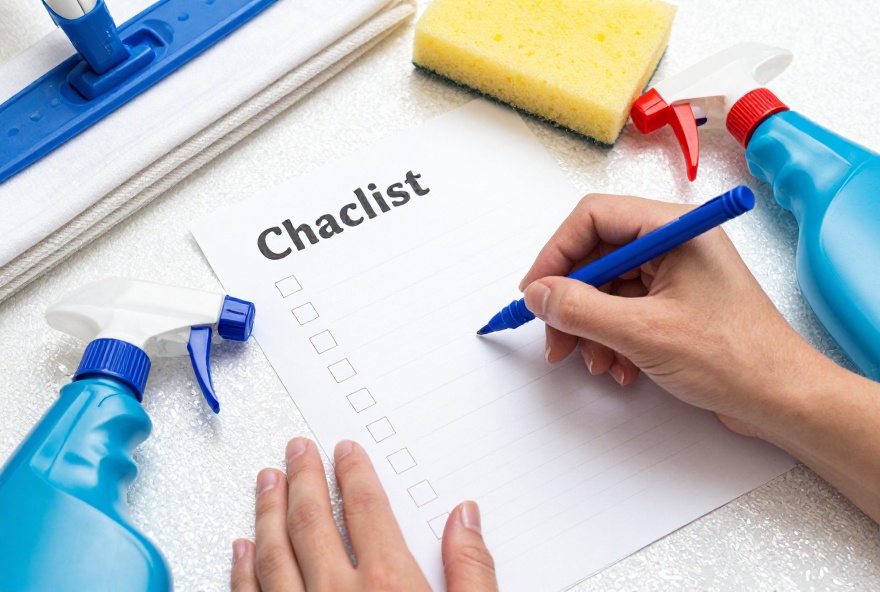
- Document your checklist and stick to it—Consistency beats sporadic deep-cleaning marathons
- Adjust based on reality—If something on your checklist isn’t actually making a difference, remove it guilt-free
Time-Saving Hacks That Actually Work
You know what separates people who feel perpetually behind on cleaning from those who stay on top of it? Efficiency tricks that save real time. When you’re working from a smart cleaning checklist, these hacks become even more powerful because you’re not wasting minutes on low-impact tasks. Batch your activities, use the right tools for the job, and embrace shortcuts that don’t compromise the results you actually care about. Time is your most valuable resource, and strategic cleaning respects that.
- Batch by room—Clean one room completely before moving to the next, rather than bouncing around
- Keep supplies in a caddy—No more hunting for spray bottles and cloths; everything travels with you
- Use a timer—Twenty minutes of focused cleaning beats an hour of distracted, inefficient work
- Clean as you go during the week—Five minutes daily prevents the nightmare weekend marathon
- Invest in quality tools—A good vacuum or microfiber cloths genuinely cut cleaning time by a third
Delegation: The Secret Weapon Most People Overlook
Here’s something nobody talks about enough—delegation is part of a smart cleaning checklist. Not every task needs to fall on your shoulders, and honestly, trying to do everything yourself is why you’re exhausted. Whether that means hiring someone quarterly, asking family members to take ownership of specific areas, or outsourcing the truly time-consuming tasks, delegation frees up mental and physical energy for the high-impact work. The 80/20 rule in housekeeping includes the principle that some tasks are better handled by someone else entirely.
- Assign family members specific responsibilities—Kids can handle their own rooms; partners can manage kitchen duty
- Hire help for quarterly deep-cleaning—One professional session quarterly beats you struggling monthly
- Consider service subscriptions for specific tasks—Lawn care, window cleaning, or carpet cleaning on a schedule removes items from your mental load
- Outsource what drains you most—If you hate mopping, paying someone fifteen dollars to do it might be the best money you spend
Measuring Success: What Actually Matters
The final piece of building a checklist for smart cleaning is redefining what “clean” actually means to you. Stop comparing your home to magazine spreads or your neighbor’s obsessive standards. Clean should mean spaces that function well, surfaces that aren’t sticky, and areas where you feel comfortable. When you measure success by visual impact and how your home actually feels—not by how many hours you’ve logged—everything shifts. You’ll finish faster, feel better, and stop resenting your own home.
- Ask yourself: Would a visitor immediately notice if this wasn’t done?—If no, it’s probably not worth your time
- Track how long your checklist actually takes—Most people find they can maintain a clean home in 3-4 hours weekly
- Notice how your space feels—Clutter-free and tidy matters way more than dust-free and polished
- Celebrate wins—When you finish your checklist and your home looks great, acknowledge that you’ve nailed efficiency
- Revisit and refine quarterly—Your checklist should evolve as your life and priorities shift
Making Your New Routine Stick
The difference between a checklist that changes your life and one that gathers dust is implementation. You’ve got to actually use the thing. Start small—pick three high-impact tasks and commit to those for two weeks before adding more. Use your phone’s notes app or a simple printed sheet. Set a recurring reminder. The beauty of focusing on high-impact tasks is that you’ll see results fast, which creates momentum and motivation. You’re not signing up for hours of thankless labor; you’re committing to strategic, efficient cleaning that respects your time and delivers real results.
- Start with a one-week trial—Test your checklist before fully committing to it
- Schedule cleaning time like any other appointment—Treat it as non-negotiable but also time-limited
- Celebrate early wins—When your home looks great after just an hour, you’ll feel the motivation
- Share your system with family or friends—Accountability and community support make habits stick
- Adjust frequency based on your actual life—If weekly isn’t sustainable, do every ten days instead
Cleaning doesn’t have to be a monumental effort if you play it smart. Using the 80/20 rule in housekeeping, you can focus on a strategic checklist for smart cleaning that actually saves time. The goal is to stop wasting energy on low-impact tasks and instead concentrate on those chores that create the biggest visual impact. Prioritize key areas like your living room and kitchen, where a little effort goes a long way. It’s also perfectly fine to delegate or even skip tasks that aren’t contributing significantly to your home’s overall appearance. By embracing an efficient cleaning strategy, you can reclaim time for what truly matters.
Now, if this rundown has sparked a clean-up epiphany, why not put it into action? Grab your mop—or your handy delegation list—and make that house sparkle! And hey, we’d love to hear your success stories or tips over on our Facebook or Instagram. Let’s clean smarter, not harder, folks!