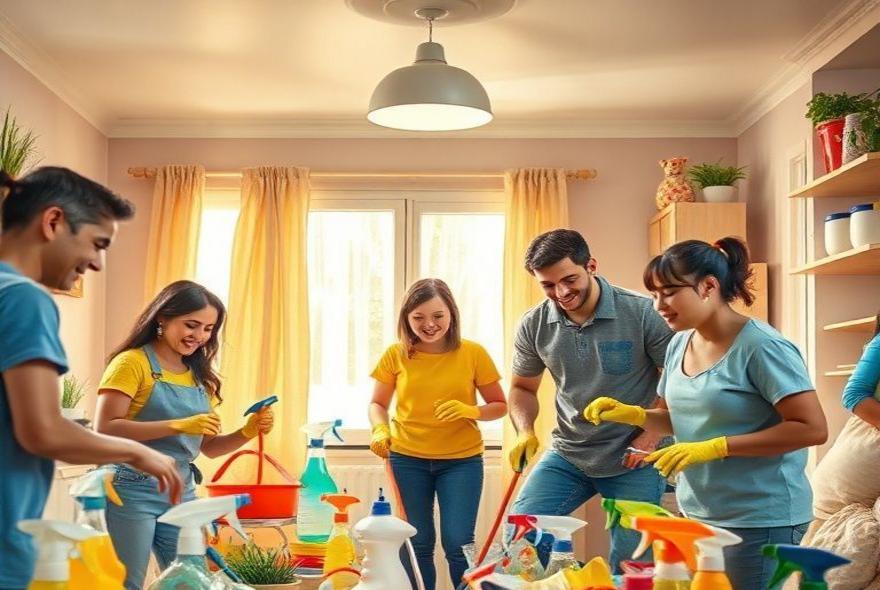
Sure, cleaning isn’t anyone’s idea of a rockin’ Friday night, but what if it could be? Welcome to our ‘Checklist for Building a Family Cleaning Tradition.’ Gone are the days of solitary scrubbing! This post dives deep into turning cleaning into a fun family activity that might just rival game night, except with a lemon-scented twist. Whether you’re a neat freak or more inclined to embrace the chaos, this playful guide aims to create a sense of togetherness while tackling those dust bunnies. Let’s make cleaning less chore and more cheer!
Key Takeaways
- Turn cleaning chaos into family fun with this ultimate checklist—bye-bye dust bunnies!
- Discover how a family cleaning tradition can bring you all closer—yes, it’s possible!
- Set routines that even teens can get behind (really) with our cleaning tradition tips.
- Forget chores that make everyone groan—it’s all about teamwork and high-fives.
- Level up your weekends and find a cleaning schedule that suits the whole clan.
Starting Small: The Foundation of Your Family Cleaning Tradition
You know that overwhelming feeling when you think about getting your entire family on board with cleaning? Yeah, we’ve all been there, staring at the chaos wondering where to even begin. The secret sauce to building a lasting family cleaning tradition isn’t diving headfirst into a complete household overhaul—it’s starting with bite-sized, manageable steps that don’t make everyone want to run for the hills. When we approach cleaning as a gradual family journey rather than a one-day miracle transformation, magic starts to happen.
- Begin with just 15 minutes daily: Pick one specific time when everyone’s usually home and energy levels are decent—maybe after dinner or before weekend breakfast—and commit to just a quarter-hour of focused family cleaning time.
- Choose one room or area to focus on initially: Instead of tackling the entire house, start with a common area like the living room or kitchen where everyone can see immediate results and feel accomplished together.
- Create a simple signal or ritual: Whether it’s playing a specific song, ringing a small bell, or doing a silly family chant, having a consistent way to announce cleaning time helps build anticipation rather than dread.
- Celebrate small victories together: Take photos of your cleaned spaces, do a family high-five circle, or enjoy a special treat after completing your cleaning session—positive reinforcement makes the tradition stick.
- Keep expectations realistic: Some days will be better than others, and that’s completely normal—the goal is consistency over perfection, building habits that can weather busy schedules and occasional resistance.
Age-Appropriate Task Assignment That Actually Works
Here’s where most families stumble—assigning tasks that are either too challenging or too boring for each family member’s developmental stage and personality. The trick isn’t just thinking about what needs to be done, but matching those needs with what each person can realistically handle and even enjoy. We think the sweet spot lies in giving everyone meaningful responsibilities that make them feel important while ensuring tasks aren’t so overwhelming that they create frustration instead of accomplishment.
- Toddlers and preschoolers (ages 2-5): Focus on simple sorting activities like putting toys in bins, matching socks, wiping surfaces with damp cloths, and making their beds by pulling covers up—their attention spans are short but their desire to help is huge.
- Elementary age kids (ages 6-10): Assign more complex tasks like vacuuming specific areas, organizing bookshelves, folding smaller laundry items, setting and clearing the table, and managing their own toy collections with minimal supervision.
- Tweens and teens (ages 11+): Give them ownership over entire processes like managing their laundry from start to finish, deep cleaning bathrooms, planning and executing room reorganization projects, and helping coordinate family cleaning schedules.
- Adults lead by example: Handle the most challenging or dangerous tasks while demonstrating proper techniques, maintaining encouraging attitudes, and showing that everyone contributes regardless of age or ability level.
- Rotate responsibilities regularly: Switch who does what every few weeks to prevent boredom, help everyone develop diverse skills, and ensure no one gets stuck with tasks they absolutely hate for too long.
Creating Your Family Cleaning Playlist and Atmosphere
Music changes everything—and I mean everything—when it comes to making cleaning feel less like drudgery and more like a family dance party. The right soundtrack can transform your cleaning tradition from something people endure to something they genuinely look forward to each week. You know how certain songs instantly put you in a good mood? That’s the power we’re harnessing to make your family cleaning sessions feel energetic, fun, and memorable rather than tedious.
- Let everyone contribute song choices: Create a rotating system where each family member gets to add their favorite upbeat songs to the cleaning playlist—this gives everyone ownership and ensures the music appeals to different tastes and age groups.
- Match tempo to task intensity: Use faster, more energetic songs for active cleaning like vacuuming and organizing, then switch to slightly calmer music for detail work like dusting or folding—the rhythm naturally guides work pace and energy levels.
- Create cleaning-specific playlists: Develop different musical collections for different types of cleaning sessions—maybe upbeat pop for quick daily tidying, classic rock for deep cleaning weekends, or silly children’s songs for family organizing time.
- Use songs as natural timers: Assign specific tasks to be completed during certain songs—kids love the challenge of finishing their assigned area before their chosen song ends, making time limits feel like games rather than pressure.
- Add fun lighting or atmosphere elements: Open curtains for natural light during daytime sessions, use colorful LED lights for evening cleaning, or even add essential oil diffusers with energizing scents like citrus or peppermint to create a complete sensory experience.
Developing Family Cleaning Challenges and Competitions
Competition can be incredibly motivating when handled thoughtfully—the key is creating challenges that bring your family together rather than driving wedges between siblings or making anyone feel inadequate. The most successful family cleaning competitions focus on teamwork, personal improvement, and celebrating different types of contributions rather than just speed or perfection. We think the magic happens when everyone feels like they have a genuine chance to win and contribute meaningfully to the family’s success.
- Team-based challenges: Create competitions where the whole family works together against the clock or toward a common goal—like organizing the entire house before a favorite movie starts or preparing for guests arriving the next day.
- Personal best tracking: Help each family member compete against their own previous performances rather than directly against each other—track improvements in speed, thoroughness, or consistency over time to celebrate individual growth.
- Skill-specific competitions: Design challenges that highlight different strengths—maybe one person excels at organizing, another at deep cleaning, and someone else at creative storage solutions—rotate focus areas so everyone gets chances to shine.
- Mystery challenges: Keep things exciting by introducing surprise elements like “today we’re cleaning blindfolded” (safely, of course) or “everyone has to clean using only their non-dominant hand” to add humor and novelty to routine tasks.
- Seasonal or themed competitions: Tie cleaning challenges to holidays, seasons, or family interests—spring cleaning olympics, Halloween organization spookiness, or summer preparation challenges that connect cleaning to bigger family events and traditions.
Building Consistency Through Flexible Scheduling
Consistency doesn’t mean rigidity—in fact, the most sustainable family cleaning traditions are those that bend without breaking when life gets hectic. The goal is creating a framework that’s strong enough to maintain momentum but flexible enough to accommodate soccer tournaments, work deadlines, illness, and all the other curveballs that family life throws your way. Smart families build adaptability into their cleaning traditions from the very beginning rather than trying to force perfection.
- Establish non-negotiable minimums: Identify the absolute bare minimum that must happen to keep your home functional—maybe it’s just clearing kitchen counters and picking up living room clutter—so you can maintain some structure even during crazy weeks.
- Create backup plans for busy periods: Develop shortened versions of your regular cleaning routine that take half the time but still maintain basic order—these “emergency protocols” prevent you from abandoning the tradition entirely during stressful times.
- Build in make-up opportunities: When regular cleaning sessions get skipped, have systems for catching up that don’t feel punitive—maybe weekend intensive sessions or breaking missed tasks into smaller pieces spread across several days.
- Adjust expectations seasonally: Recognize that school years, summer vacations, holiday periods, and other life phases require different approaches—what works in January might need modification by June, and that’s perfectly normal.
- Include family input in schedule modifications: When routines aren’t working, involve everyone in problem-solving rather than just making unilateral changes—kids often have creative solutions and are more likely to follow systems they helped design.
Teaching Life Skills Through Family Cleaning Traditions
Beyond just getting your house clean, family cleaning traditions are incredible opportunities to teach practical life skills, work ethic, teamwork, and personal responsibility in ways that feel natural rather than preachy. When kids grow up participating in regular family cleaning, they develop competencies and attitudes that serve them well throughout their lives. The beautiful thing is that these lessons happen organically through shared experiences rather than through lectures or formal instruction.
- Problem-solving and critical thinking: Cleaning challenges teach kids to assess situations, prioritize tasks, and find creative solutions—like figuring out the most efficient way to organize a cluttered closet or determining which cleaning supplies work best for different surfaces.
- Time management and planning: Regular cleaning sessions help children learn to estimate how long tasks take, plan sequences of activities, and work within time constraints—skills that transfer directly to homework, projects, and future job responsibilities.
- Quality standards and attention to detail: Through cleaning traditions, kids develop understanding of what “clean enough” versus “thoroughly clean” looks like, learning when to be detail-oriented and when efficiency matters more than perfection.
- Teamwork and communication: Family cleaning requires coordination, cooperation, and clear communication about who’s doing what—kids learn to negotiate, compromise, and work together toward shared goals.
- Personal responsibility and follow-through: Having regular cleaning responsibilities teaches children to complete tasks even when they don’t feel like it, building work ethic and reliability that benefits them in school, relationships, and eventually careers.
Celebrating Milestones and Maintaining Long-term Motivation
Every family cleaning tradition needs celebrations and recognition to sustain motivation over months and years—without acknowledgment of progress and achievements, even the most enthusiastic families can lose steam and let their routines fade away. The trick is creating celebration systems that feel genuine and meaningful rather than forced or overly complicated. You want to mark both small daily successes and bigger milestone achievements in ways that reinforce the positive aspects of your cleaning tradition.
- Document progress with photos: Create before-and-after albums showing how your family’s cleaning skills and home organization have improved over time—kids love seeing visual proof of their growing competence and the tangible results of their efforts.
- Establish milestone rewards: Celebrate bigger achievements like maintaining the routine for a full month, completing seasonal deep-cleaning projects, or successfully organizing challenging areas with special family activities or treats that everyone enjoys.
- Share successes with extended family: Let grandparents, aunts, uncles, and family friends know about your cleaning tradition achievements—kids beam with pride when adults outside the immediate family recognize their growing responsibility and contribution to household management.
- Create annual cleaning tradition reviews: Set aside time each year to talk about what’s working well, what could be improved, and how the tradition has helped your family grow closer and more organized—this reflection reinforces the value of your efforts.
- Graduate to bigger responsibilities: As children demonstrate consistency and skill, gradually expand their roles in household management—eventually, older kids might plan and coordinate family cleaning sessions, teaching them leadership while showing trust in their abilities.
Troubleshooting Common Roadblocks and Resistance
Even the best-planned family cleaning traditions hit snags—days when nobody wants to participate, periods when motivation disappears, or situations where the routine just isn’t working anymore. Don’t worry, this is completely normal and doesn’t mean your tradition is doomed! The key is recognizing that resistance and challenges are part of the process, not signs of failure. Smart families prepare for these bumps in the road and have strategies ready to get back on track without abandoning their cleaning tradition entirely.
- Address “cleaning fatigue” proactively: When family members start showing signs of boredom or resistance, shake things up by changing locations, trying new music, introducing different challenges, or even taking a planned break before enthusiasm completely disappears.
- Handle perfectionist tendencies gently: Some kids get overwhelmed trying to make everything perfect, so break tasks into smaller steps, celebrate “good enough” efforts, and emphasize progress over perfection—the goal is building sustainable habits, not creating stress.
- Manage sibling conflicts constructively: When competition becomes negative or arguments arise over task distribution, refocus on team goals, rotate responsibilities more frequently, or create individual recognition systems that don’t pit family members against each other.
- Adapt to changing family circumstances: Life phases like new babies, job changes, moves, or schedule shifts require routine adjustments—involve the whole family in brainstorming modifications rather than letting changing circumstances derail your tradition completely.
- Restart after interruptions: When illness, vacations, or busy periods cause breaks in your routine, plan intentional “fresh start” sessions that feel exciting rather than like catching up on missed work—sometimes a new beginning is exactly what your tradition needs.
In wrapping up our journey through creating a family cleaning tradition, it’s clear that turning chores into moments of togetherness transforms the mundane into the memorable. First and foremost, creating a fun family cleaning routine fosters cooperation and strengthens the bonds within your household, making everyone look forward to cleaning day. By establishing a checklist, you ensure that tasks are evenly distributed and that everyone knows their role, which enhances efficiency. Engaging the family with music, games, or rewards can turn tedious chores into enjoyable activities. These simple steps culminate in a shared sense of accomplishment and a cleaner, happier home. Who knew cleaning could be the glue that keeps a family together?
And hey, if this inspired a cleaning spree but life’s too busy, remember we’ve got your back. Wrapping this up, if you’re ready to tackle your home cleaning without the hassle, hit us up at Joy of Cleaning. Book a Cleaning online or call us at (727) 687-2710. Don’t miss out on more fun tips and updates—follow us on Facebook and Instagram! Because a cleaner home is just a click, tap, or call away.